Welcome
From: John.Fletcher@Open-Rbi.com
Dear visitor,
Welcome to OpenRBI. I developed OpenRBI for fellow engineers, inspectors and asset owners who need a practical, adaptable approach to risk-based inspection. Its purpose is to help bring equipment information, damage mechanisms, likelihood, consequences and inspection planning together in a structured assessment, while allowing the approach to reflect the equipment, organisation and applicable requirements.
OpenRBI is used as two local applications, both of which run in a web browser.
Fulcrum is the plant organiser which holds the plant structure, location, design reports, notes and the reference data used in an assessment.
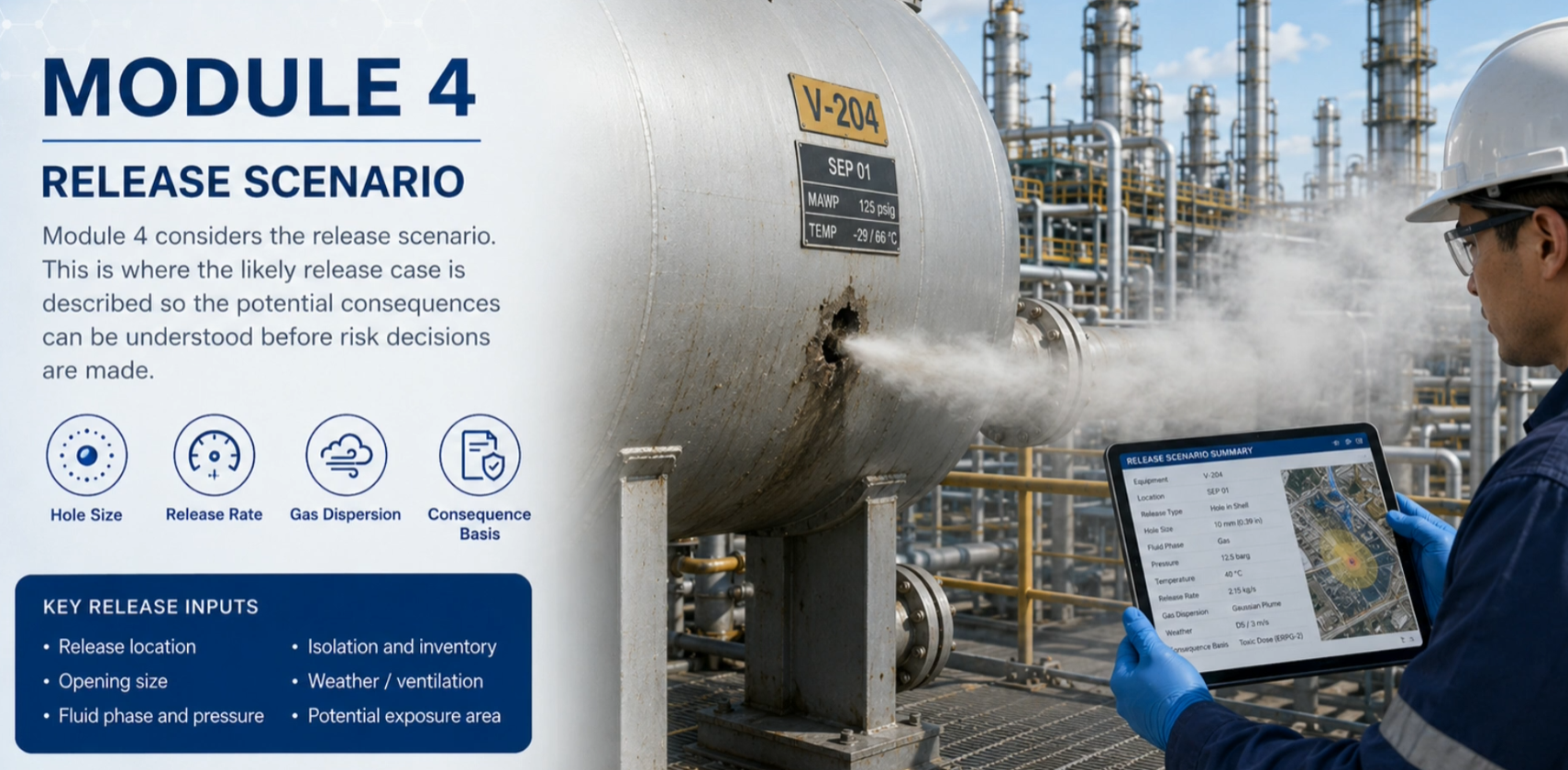
RBI Vessel is the pressure-vessel assessment. It takes the equipment from design and operating data through process chemistry, release, consequence, damage mechanisms, risk and an inspection plan, and it writes a report of the results selected for that equipment.
OpenRBI supports qualitative, semi-quantitative and fully quantitative assessment approaches. In RBI Vessel you select the level of detail that matches the evidence you have. Specialist analysis and the records that support it are kept in Fulcrum and used where they are needed. The aim is to support engineering judgement through an understandable workflow.
You keep your Fulcrum files, vessel assessment files and supporting records under your own control, choosing where to store them and whom to share them with. The data library is maintained in Fulcrum. RBI Vessel uses a read-only copy of that library for the assessment. Separate calculators can be used independently, and you choose when to load or transfer information between them.
To get started, open Fulcrum and become familiar with the plant organiser and the data library. Then open the online edition of RBI Vessel. Use your own equipment information or the demo. Begin with the design and operating data, identify missing or conflicting records, and work through the assessment towards an inspection plan. The vessel report records the selections made for that equipment. Screenshots and a worked example can help explain each stage and show how the information contributes to the resulting assessment.
OpenRBI supports assessment and documentation, but engineering responsibility remains with the people reviewing and authorising the work. Equipment data, assumptions, calculations and inspection recommendations need appropriate technical review, and use of the software does not itself establish compliance with legislation or standards.
The software is offered free of charge, with paid implementation support (i.e., me) available. Please check the licence supplied with your copy for the terms of use, and record the Fulcrum and RBI Vessel versions used for each assessment so that subsequent changes can be traced. If you would like help applying OpenRBI within your organisation, please contact me to discuss your requirements.
I welcome questions, suggestions and feedback, including your experiences using Fulcrum and RBI Vessel and ideas for improvements.
You can contact me at john.fletcher@open-rbi.com